Research
Apoptosis Avoidance in Cancer and Fibrosis
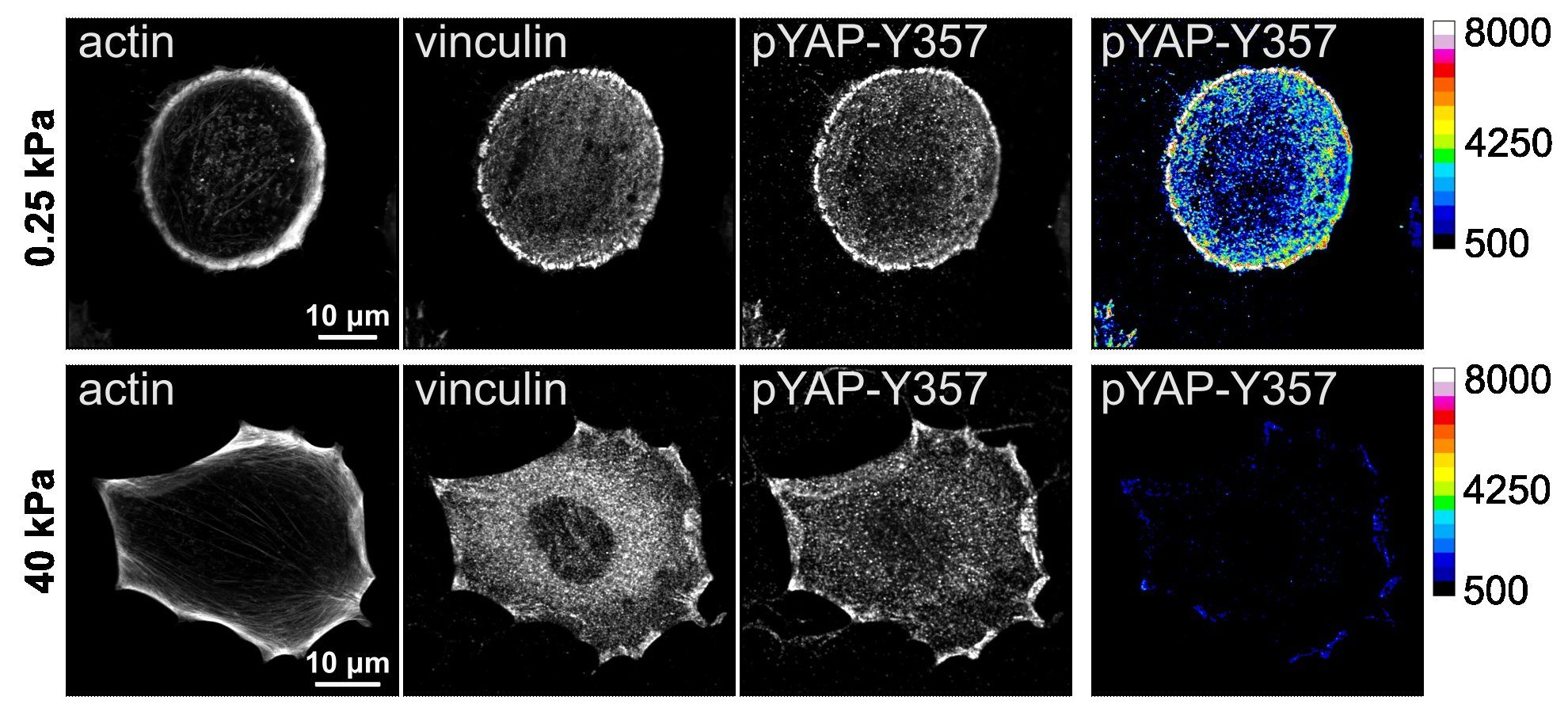
We recently identified a novel mechanobiological pathway involving YAP (Yes-associated protein) that activates apoptosis through cell–matrix adhesions (Shi et al., 2024). Under normal conditions, this pathway is triggered when cells reside on very soft matrices, serving as a safeguard against inappropriate survival in non-supportive environments.
Intriguingly, in both cancer and fibrosis, the ability to avoid apoptosis is a critical driver of disease progression. In cancer, bypassing this apoptotic mechanism allows malignant cells to persist and eventually metastasize, spreading to distant tissues and driving disease progression. In fibrosis, the resistance to apoptosis by myofibroblasts leads to excessive extracellular matrix deposition and progressive tissue stiffening, creating a pathological feedback loop that worsens organ function.
Our research focuses on unraveling the molecular mechanisms behind this phenomenon. How do these cells bypass YAP-mediated apoptotic signaling? What alternative pathways or structural adaptations allow them to resist mechanical cues? By addressing these questions, we aim to uncover fundamental principles of mechanotransduction and identify novel therapeutic targets that restore normal apoptotic responses. Ultimately, these insights could lead to strategies that selectively eliminate pathological cells while preserving healthy tissue function.